


What Is Marketing Operations? Complete Guide for 2026
Marketing operations (MOps) is the function that runs the systems behind modern B2B marketing, managing the tech stack, data, and processes that make campaigns launch smoothly and performance measurable. In this guide, you’ll learn what MOps teams do day to day, the skills and tools they rely on, and how to build an operating model that keeps marketing and revenue aligned as you scale.

What Is Marketing Operations? Complete Guide for 2026
Marketing operations is the function that manages the technology, data, and processes enabling marketing teams to execute campaigns efficiently and prove their impact on revenue. It's the engineering discipline behind modern marketing—less about what to say, more about how to make everything actually work.
This guide covers what MOps teams do day-to-day, the skills and tools required, how to build a marketing operations strategy from scratch, and the team structures that scale with growth.
What Is Marketing Operations
Marketing operations (MOps) is the function that manages technology, data, and processes so marketing teams can execute campaigns efficiently and hit business goals. It sits between strategy and execution by handling the tech stack, analyzing performance, managing budgets, and keeping teams aligned across the organization.
You can think of MOps as the engineering side of marketing. While demand gen runs campaigns and content teams write copy, marketing operations builds and maintains the infrastructure that makes everything work.
The function covers five core areas:
- Technology management: Administering the MarTech stack, including CRM, email platforms, and analytics tools
- Data and analytics: Managing customer records, building dashboards, and measuring ROI
- Process optimization: Streamlining workflows to reduce friction and speed up launches
- Campaign execution: Supporting targeting, scheduling, and quality assurance
- Strategic planning: Connecting marketing activities to broader business objectives
Why Marketing Operations Matters for B2B Teams
B2B marketing involves longer sales cycles, multiple decision-makers per deal, and complex handoffs between marketing and sales. Without solid operations, campaigns launch late, data gets messy, and attribution turns into guesswork.
Marketing operations connects activities directly to revenue. When a lead converts, MOps ensures that conversion data flows back to the CRM, updates the lead score, and triggers the right follow-up sequence—all without anyone touching a spreadsheet.
For high-growth teams, operational maturity determines how fast you can scale. You might have brilliant campaign ideas, but if your data lives in five different systems and your workflows break every time someone updates a field, growth stalls.
Core Functions of Marketing Operations
Data Management and Governance
Data governance refers to the formal management of data assets—making sure records stay consistent, trustworthy, and properly used. In practice, this means maintaining clean customer records, enforcing naming conventions, and preventing duplicates from polluting your CRM.
Poor data quality cascades everywhere, costing organizations $12.9 million annually. Sales reps waste time on bad leads, personalization fails, and reporting becomes unreliable. MOps owns the systems and processes that keep data clean.
Campaign Management and Execution
This is the day-to-day work: building email campaigns, setting up automation triggers, configuring audience segments, and running QA before anything goes live.
Campaign ops also involves troubleshooting. When an email doesn't render correctly or a workflow misfires, MOps diagnoses and fixes the issue.
Lead Generation and Scoring
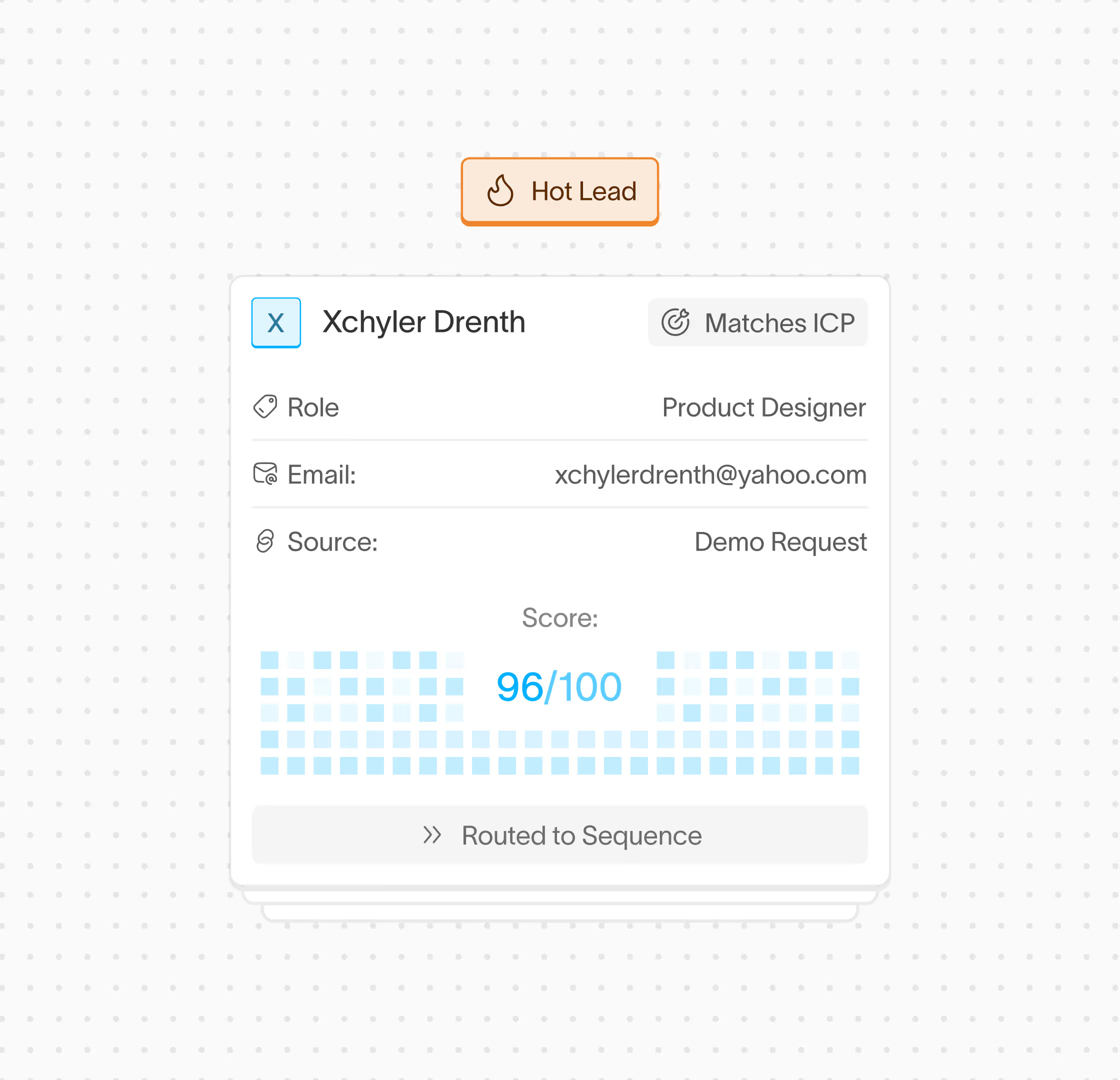
Lead scoring ranks prospects based on their perceived value to the business. MOps builds and maintains scoring models that combine demographic data (company size, industry) with behavioral signals (page visits, email engagement).
Once leads hit a certain threshold, routing rules send them to sales. Getting this handoff right requires close collaboration with sales operations.
Reporting and Analytics
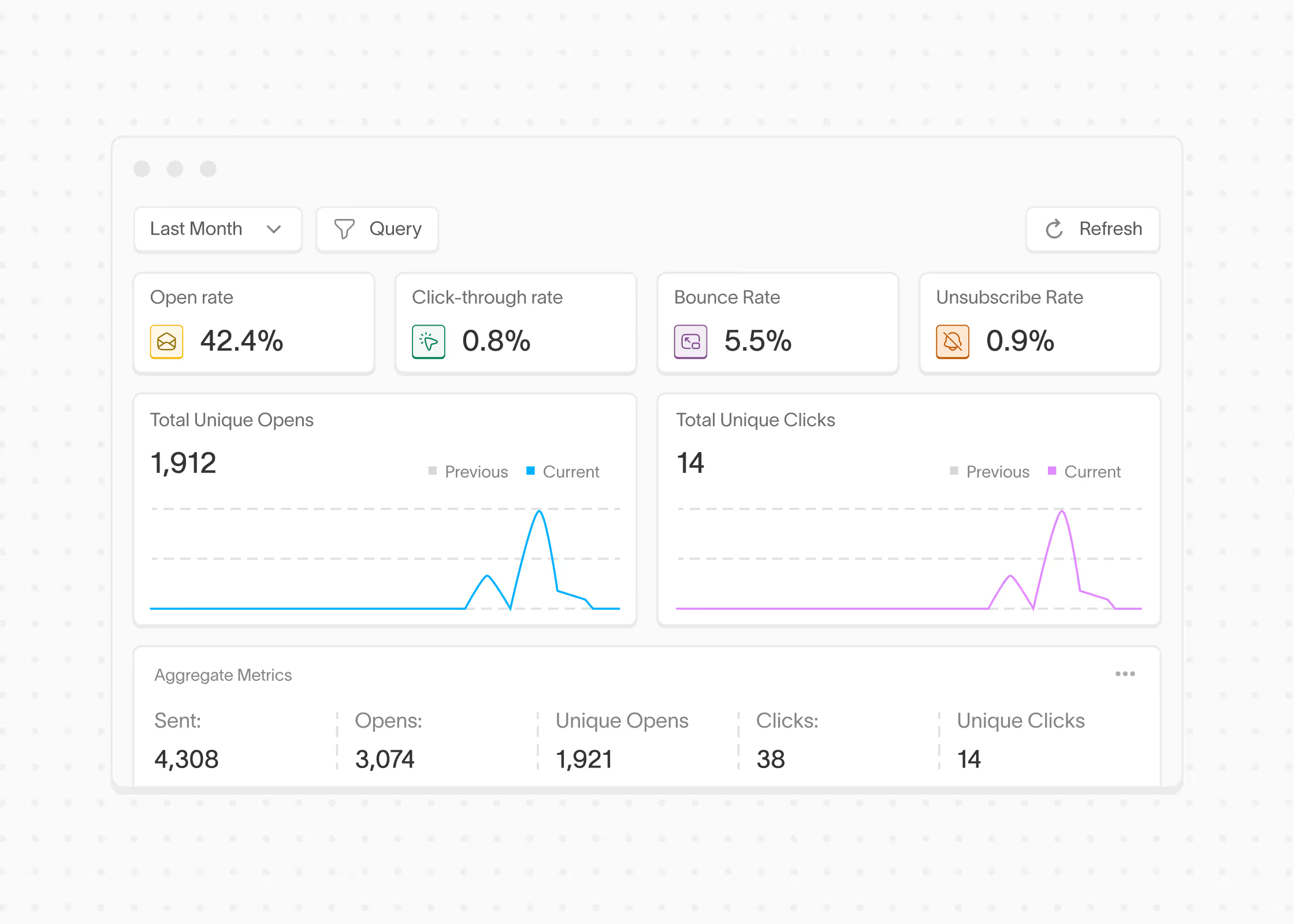
MOps sets up the dashboards that show what's working—campaign performance metrics, funnel conversion rates, and attribution models that connect marketing touches to closed revenue.
Attribution modeling, which determines which touchpoints influenced a deal, remains one of the trickiest challenges in B2B marketing. MOps typically owns the technical implementation.
Process Automation and Workflows
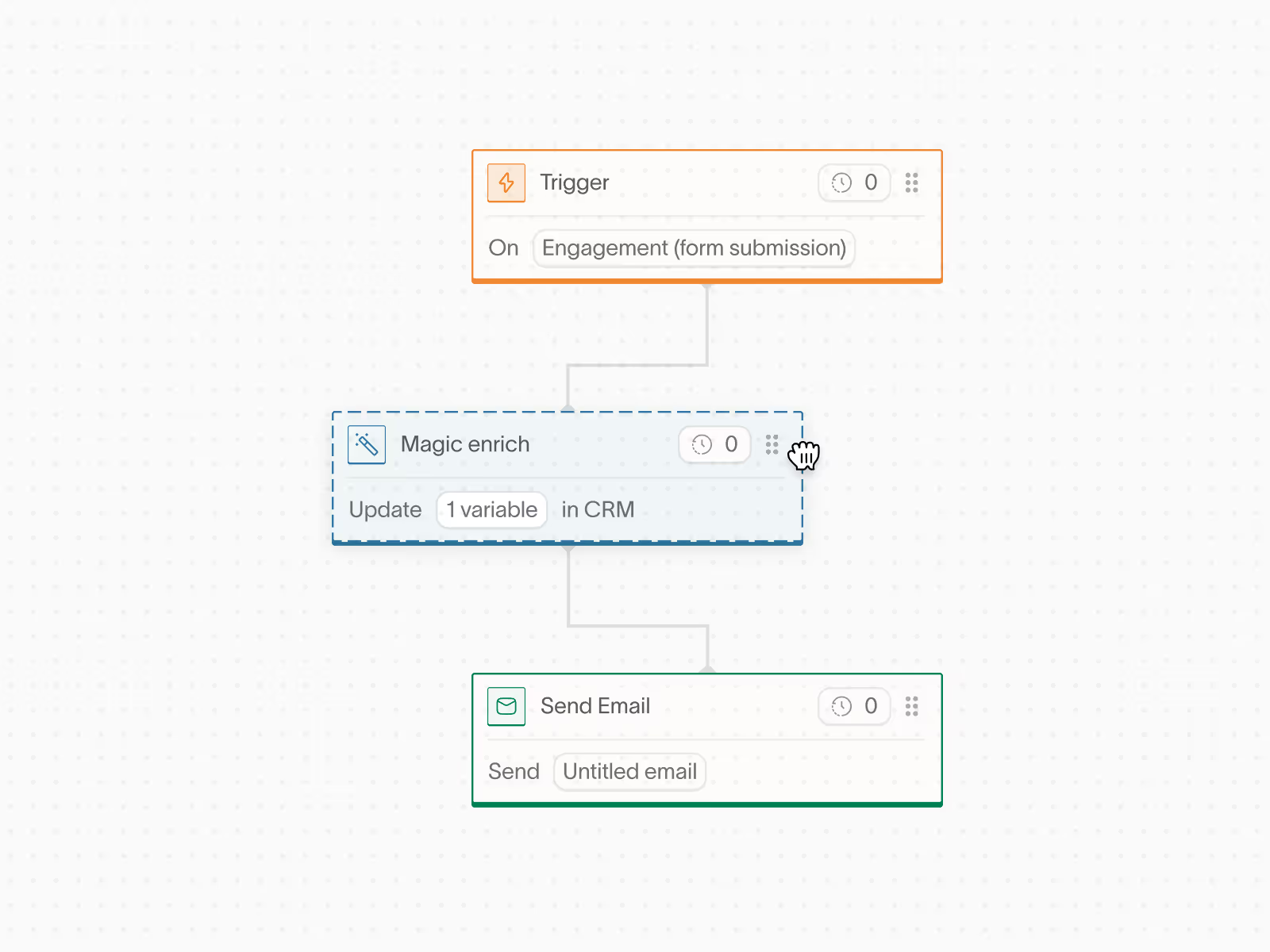
Workflow automation uses rule-based logic to execute tasks without human intervention. A simple example: when a contact fills out a demo request form, the system automatically creates a task for sales, sends a confirmation email, and updates the lead status.
More sophisticated workflows nurture leads over weeks based on their behavior, adjusting content and timing dynamically.
Essential Marketing Operations Skills
Technical and Platform Skills
MOps professionals work hands-on with marketing automation platforms like HubSpot, Marketo, or Pardot. CRM administration—particularly Salesforce—is often part of the job.
Basic HTML and CSS help when troubleshooting email templates. Understanding APIs becomes important when integrating tools or debugging sync issues.
Analytical and Data Skills
SQL proficiency opens up direct database access for custom reporting. Advanced spreadsheet skills remain essential for data manipulation and analysis.
Data visualization—turning numbers into charts that tell a story—helps communicate findings to stakeholders who don't live in the data every day.
Project Management Skills
MOps coordinates work across multiple teams with competing priorities. Familiarity with methodologies like Agile or Scrum helps manage complex projects with many dependencies.
Documentation matters too. Clear runbooks ensure processes don't live only in one person's head.
Cross-functional Communication Skills
Marketing operations sits at the intersection of marketing, sales, IT, and sometimes product. Translating technical concepts for non-technical stakeholders is a daily requirement.
Building relationships with sales ops proves especially valuable. Many of the thorniest problems—lead routing, attribution, data quality—span both functions.
Marketing Operations Tools and Software
Marketing Automation Platforms
Marketing automation platforms handle email campaigns, lead nurturing sequences, landing pages, and forms. They're the primary workspace for campaign execution.
Choosing the right platform depends on your complexity. Simple use cases might work fine with HubSpot. Enterprise B2B with complex lifecycle stages often requires more flexible solutions.
CRM Systems and Integrations
Salesforce dominates B2B with 20.7% market share as the system of record for customer data. The reliability of your CRM sync determines whether marketing and sales see the same reality.
Two-way sync matters here. Changes in the CRM flow to marketing tools, and marketing engagement data flows back. Brittle, one-way integrations create data gaps that compound over time.
Customer Data Platforms
A customer data platform (CDP) unifies customer data from multiple sources into a single view. Teams typically adopt a CDP when data fragmentation becomes unmanageable—when the same customer exists in five systems with five different profiles.
Data Warehouses and Pipelines
Product usage data often lives in a data warehouse like Snowflake or BigQuery. Bringing behavioral data into marketing operations enables more sophisticated segmentation and scoring.
For example, you might want to trigger a campaign when a user hasn't logged in for 30 days. That requires connecting product data to your marketing automation platform.
Analytics and Attribution Tools
Dedicated analytics platforms provide deeper reporting than what's built into marketing automation tools. They're essential for multi-touch attribution and cross-channel analysis.
How to Build a Marketing Operations Strategy
1. Audit Your Current Marketing Operations State
Start by documenting everything: tools, processes, data flows, integrations. Map where data lives and how it moves between systems.
Identify pain points along the way. Where do campaigns get stuck? What manual work could be automated? Which reports take hours to build?
2. Define Marketing Operations Goals and KPIs
Align MOps goals to business objectives. If the company wants to accelerate pipeline, MOps might focus on reducing campaign launch time or improving lead scoring accuracy.
Example KPIs include average time to launch a campaign, data quality scores (duplicate rates, field completeness), and marketing attribution coverage.
3. Map and Consolidate Your Technology Stack
Most marketing teams accumulate tools over time, often with overlapping functionality. Identify redundancies and integration gaps.
Consolidation reduces complexity and cost. Fewer tools means fewer sync points to maintain and fewer places for data to break.
4. Establish Data Governance Standards
Define naming conventions for campaigns, fields, and segments. Document who owns which records and how conflicts get resolved.
Set hygiene rules: how often to dedupe, what triggers a data quality alert, who reviews and merges duplicates.
5. Document Workflows and Processes
Create runbooks for repeatable processes—campaign setup, lead routing, report generation. Anything that happens regularly deserves documentation.
Good documentation reduces key-person risk and speeds up onboarding for new team members.
6. Measure Results and Iterate
Track your KPIs consistently. When something underperforms, dig into why. Marketing operations management is a continuous improvement cycle, not a one-time project.
Marketing Operations Team Structures and Roles
Centralized Marketing Operations Model
A single MOps team serves all marketing functions. This structure ensures consistency in processes and strong governance over data and tools.
The tradeoff: centralized teams can become bottlenecks when demand exceeds capacity.
Embedded Marketing Operations Model
MOps specialists sit within other teams—demand gen, product marketing, customer marketing. They develop deep expertise in their area's specific workflows.
Speed improves, but consistency can suffer. Different embedded specialists might solve the same problem in different ways.
Hybrid Marketing Operations Model
A core central team handles governance, tool administration, and standards. Embedded specialists handle day-to-day execution within their teams.
This model attempts to balance consistency with agility. It works well for larger organizations with diverse marketing functions.
Marketing Operations Best Practices
Maintain Clean and Unified Customer Data
Regularly dedupe records and standardize field values — 37% of CRM users report losing revenue from poor data quality. Ensure bidirectional sync between your CRM and marketing systems so both stay aligned.
Modern platforms built around contact-centric data models can simplify this challenge by unifying Salesforce and warehouse data in one place.
Automate Repetitive Marketing Tasks
Identify manual work that follows predictable rules. Lead routing, campaign triggers, report delivery, and data enrichment are all candidates for automation.
Every hour saved on manual work is an hour available for higher-value activities.
Align Marketing Ops with Sales Operations
Establish shared definitions. What exactly qualifies as a marketing qualified lead? When does ownership transfer to sales?
Document SLAs for lead follow-up and create unified reporting that both teams trust.
Document Processes and Runbooks
Thorough documentation reduces dependency on specific individuals. When someone goes on vacation or leaves the company, work continues without disruption.
Measure Marketing Operations Performance
Track MOps-specific metrics: data sync reliability, average campaign launch time, data quality scores. Metrics like these prove the team's value and highlight improvement opportunities.
How Data Integration Transforms Marketing Operations
The industry is shifting from brittle point-to-point integrations toward unified data platforms. Instead of maintaining dozens of individual connections, teams consolidate around platforms that handle sync complexity.
Real-time data matters more than ever. When a prospect visits your pricing page, you want that signal available for segmentation immediately—not after a nightly batch sync.
At Conversion, we've built our syncer to handle this architectural challenge. The system processes millions of records daily with built-in retries and reconciliation, ensuring marketing and CRM data stay aligned even when individual syncs fail.
Building a Unified Marketing Operations Platform
The ultimate goal is consolidating fragmented tools into a cohesive system. High-growth B2B teams benefit especially from platforms that unify Salesforce data and product data into one flexible model.
When your segmentation, campaigns, and reporting all run from the same data foundation, you eliminate the sync gaps and reporting discrepancies that plague stitched-together stacks.
Book a demo to see how Conversion can help you build a unified marketing operations platform.
FAQs about Marketing Operations
What is the difference between marketing and marketing operations?
Marketing focuses on strategy, messaging, and creative—deciding what to say and to whom. Marketing operations manages the technology, data, and processes that execute those strategies at scale.
What are the four pillars of marketing operations?
The four pillars are platform operations (technology infrastructure), campaign operations (execution and monitoring), marketing intelligence operations (analytics and insights), and marketing development operations (process improvement and team enablement).
What does a marketing operations manager do daily?
A typical day involves overseeing campaign execution, troubleshooting integration issues, maintaining data quality, building or updating reports, and optimizing workflows. The mix varies based on team size and organizational structure.
How does marketing operations differ from revenue operations?
Marketing operations focuses specifically on marketing technology and processes. Revenue operations (RevOps) is broader, spanning marketing, sales, and customer success to optimize the entire revenue lifecycle.
What does a marketing operations consultant do?
A MOps consultant audits existing systems, recommends technology and process improvements, and often implements or migrates marketing automation platforms. Consultants bring outside expertise to solve specific challenges.
What should I look for in marketing operations software?
Prioritize native CRM integration, data warehouse connectivity, flexible segmentation, and reliable two-way sync. The platform should adapt to your data model rather than forcing you into rigid structures.
More from the Wayfinder
Turn Every Form Fill-Out Into Your Next Customer
Trigger personalized emails and actions based on real-time behavior, not static lists.

.png)