Your migration runs on agents
Conversion Agents map your instance and rebuild your programs in days. A dedicated deployment strategist, a real MOps specialist who knows your stack, QAs every component and owns the outcome. Your current platform stays live until the migration is finished.
Trusted by teams that made the switch










4 wk
Average migration timeline
1:1
Dedicated strategist support
0
Gap in campaign execution
4.9
Customer satisfaction score
Your current platform stays live
Conversion runs alongside Marketo, Pardot, HubSpot, or Eloqua for the entire migration. Every program is rebuilt and validated against real data before anything switches. You decide when the migration is finished.
Both platforms run at once
Your existing MAP keeps sending, scoring, and routing while Conversion is built out. Campaign execution never pauses.
Every component is QA'd before it goes live
Agents handle the rebuild. Your strategist tests each workflow, template, and sync rule against live records, then signs off.
1 to 2 hours a week from your team
About three weeks of light involvement. You review and approve. Your strategist builds.
If a program is not ready, it stays where it is. Nothing gets switched off until you say so.
Built for the platform you're leaving
Migration playbooks written in your platform's own vocabulary. See exactly how your instance maps to Conversion.
Migrate from Marketo
Smart Campaigns, engagement programs, tokens, and Munchkin. Every piece has a mapped equivalent.
Migrate from Pardot
Prospects, Engagement Studio, HML, and completion actions, translated to a modern data model.
Migrate from HubSpot
Workflows, lists, properties, and campaigns rebuilt with native Salesforce Campaign sync.
Migrate from Eloqua
Campaign Canvas, CDOs, field merges, and program logic, moved without the Oracle baggage.
One strategist, a fleet of agents
Every migration pairs an in-house deployment strategist with Conversion Agents. Agents do the mapping and rebuilding at machine speed. Your strategist owns the plan, the quality bar, and the result.
Meet the agentsAgents do the heavy lifting
They crawl your current instance, map every program and field, and rebuild workflows in Conversion. Work that used to take a consultancy months happens in days.
Your strategist owns the outcome
A real person, in-house, who has run MOps themselves. No outsourced consultants and no ticket queues. They QA every component and own your success from kickoff through optimization.
Direct communication
A shared Slack channel with your strategist. Real answers in minutes. No routing through support tiers.
Support that outlasts go-live
Your strategist stays embedded after you go live. Weeks of monitoring, optimization, and training until your team is fully ramped.
“Our deployment strategist felt like part of our team. They knew our Marketo instance better than we did and had us fully live in three weeks. We never missed a send.”

Korey Beaver
Marketing Operations Manager, People Data Labs
Five phases, zero downtime
Agents compress the audit and rebuild from months to days. Your strategist owns the plan, the QA, and the switch itself. That is how the average migration lands at four weeks.
Discovery & Audit
Agents crawl your current platform and map every program, scoring model, email template, integration, and routing rule in days. Your strategist reviews the map with you and flags what to rebuild, consolidate, or retire.
Migration Planning
Together, you build a phased plan with clear milestones. Your team keeps running campaigns in your current platform throughout the transition.
Data Migration & CRM Sync
Contact records, custom fields, and list structures move over with agent-run validation at every step. Salesforce sync is configured and tested alongside your existing platform before anything switches.
Program Rebuild & Testing
Agents rebuild your workflows, nurture programs, and scoring models in Conversion. Your strategist tests every component end to end against live data and signs off before it ships.
Go-Live & Optimization
Your strategist stays embedded with your team after you go live. They monitor deliverability, optimize workflows, and make sure adoption sticks.
Before and after, side by side
Every vendor claims a smooth migration. Here is what the rebuild actually looks like, from the program logic to the email builder to the agents that do the work.
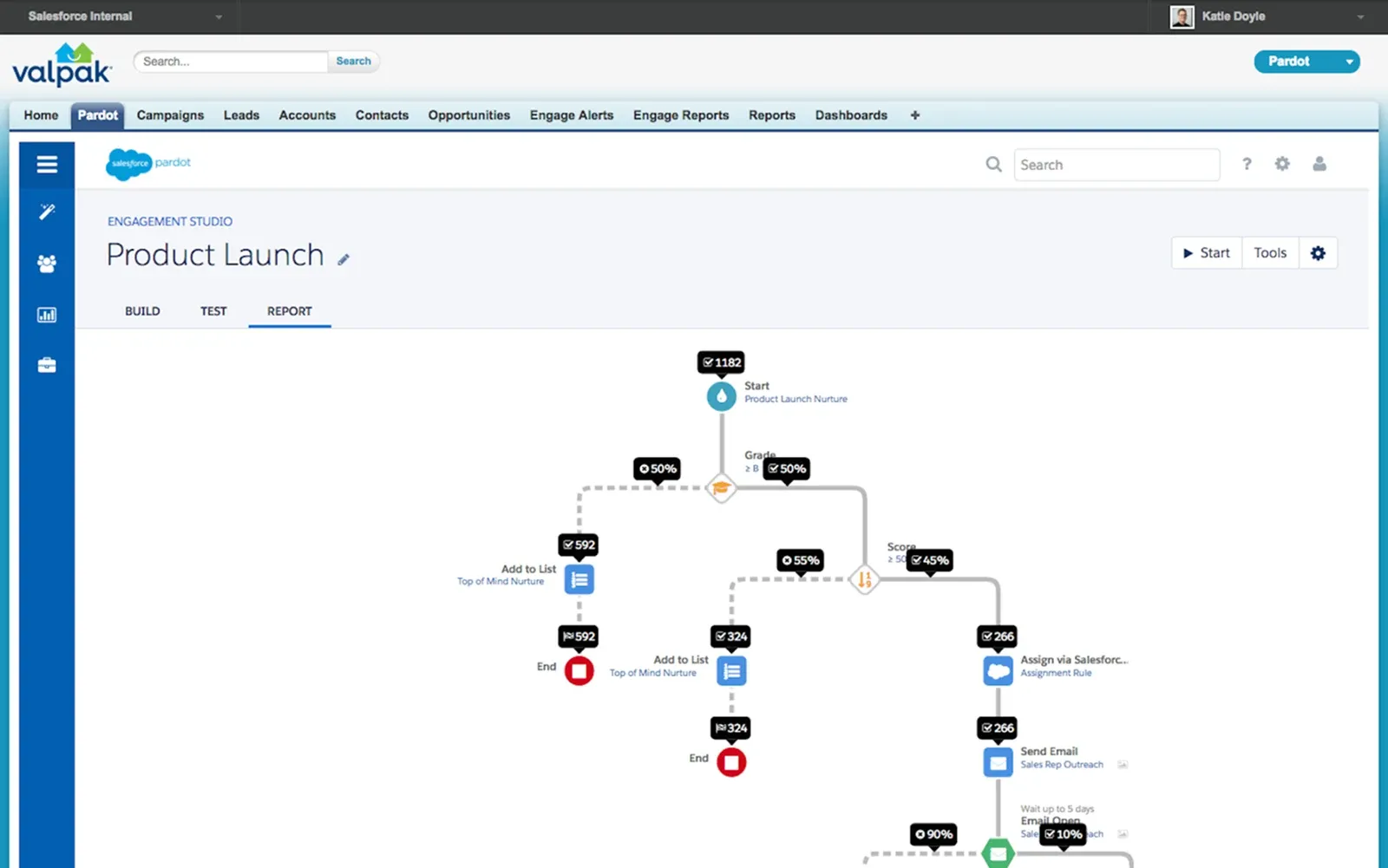
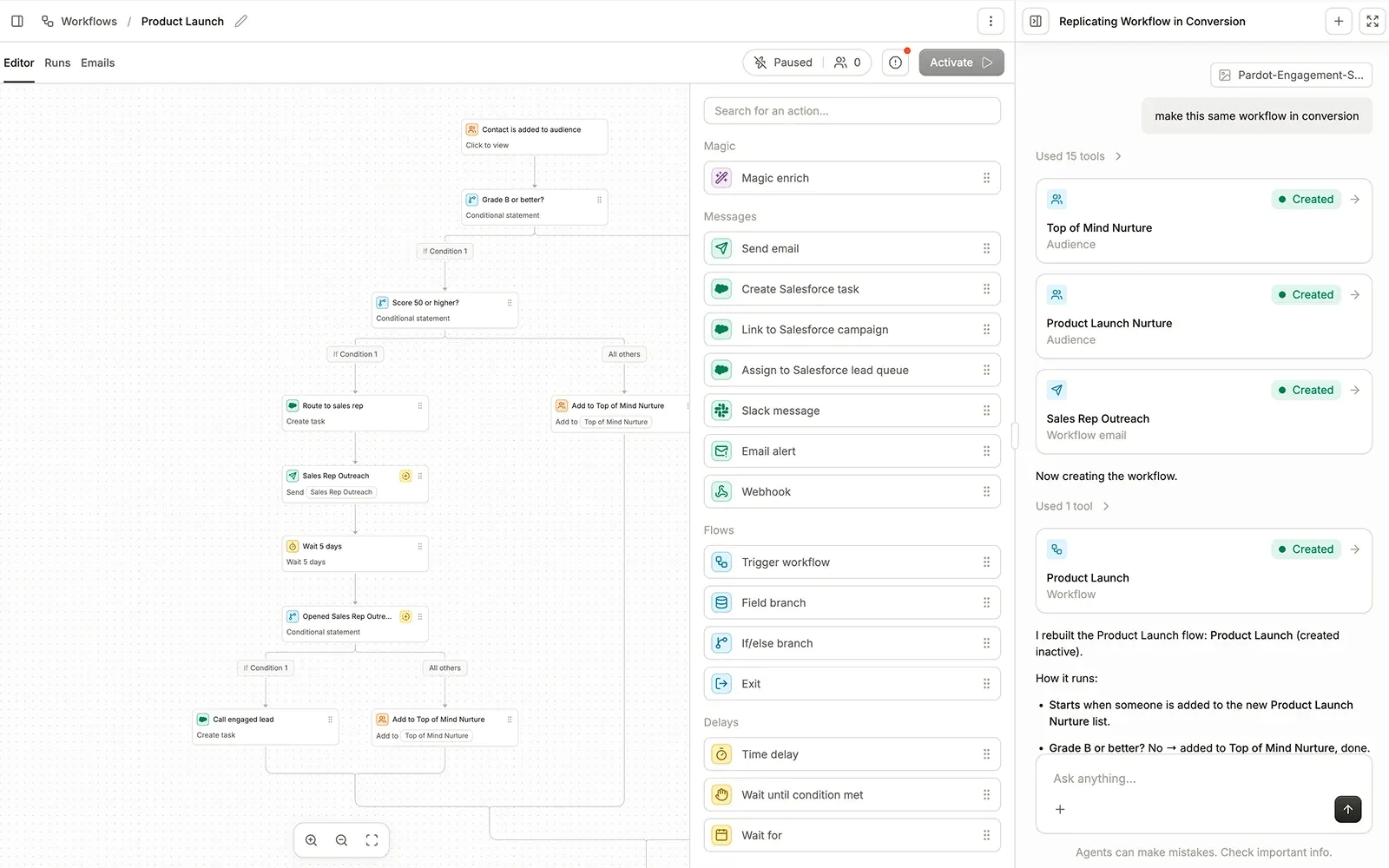
One prompt in the chat rebuilt this. Steps, rules, and completion actions came back as a workflow, with the audiences and emails created alongside it and queued for review. Multiply that by every program in your instance and you have the migration.
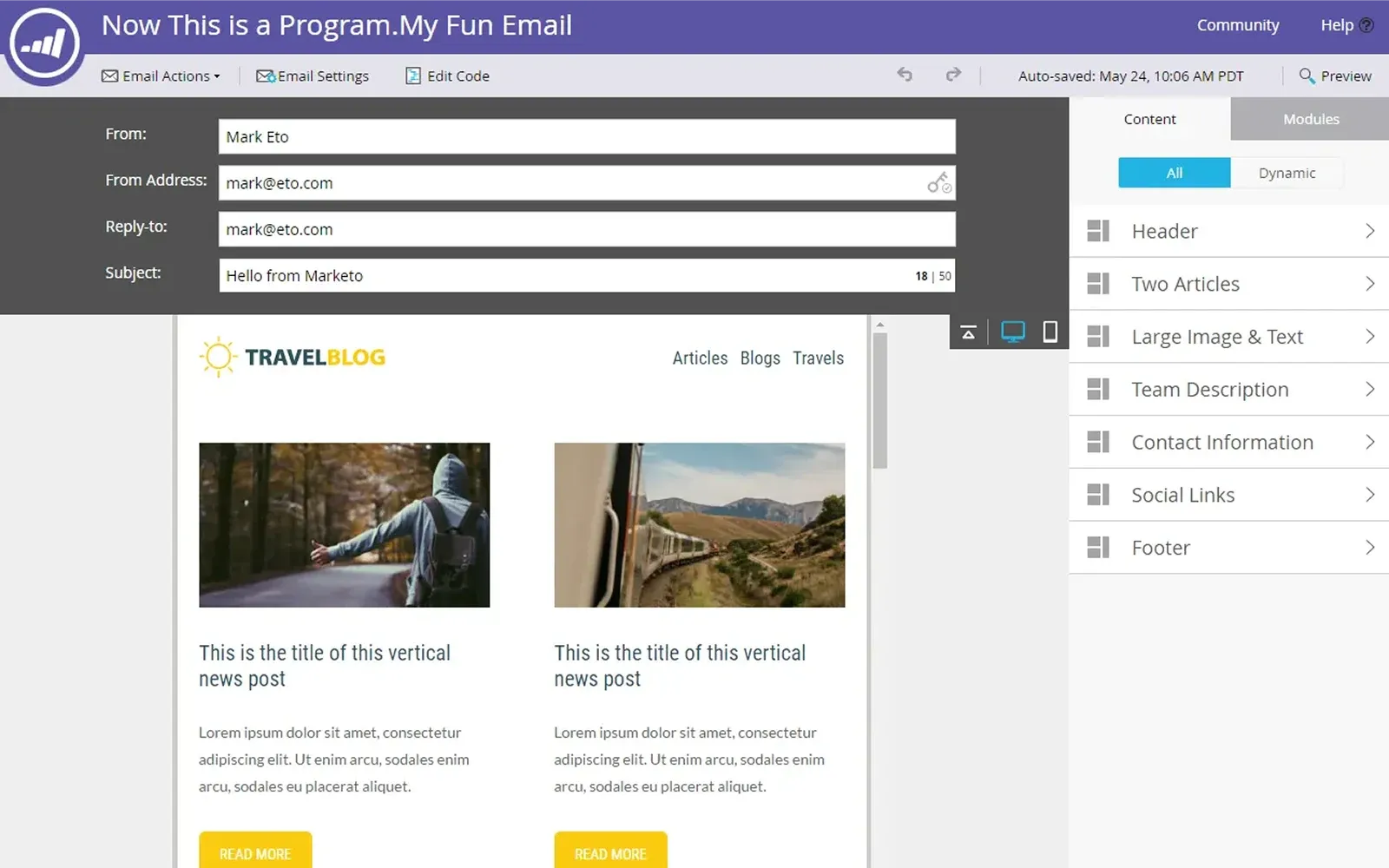
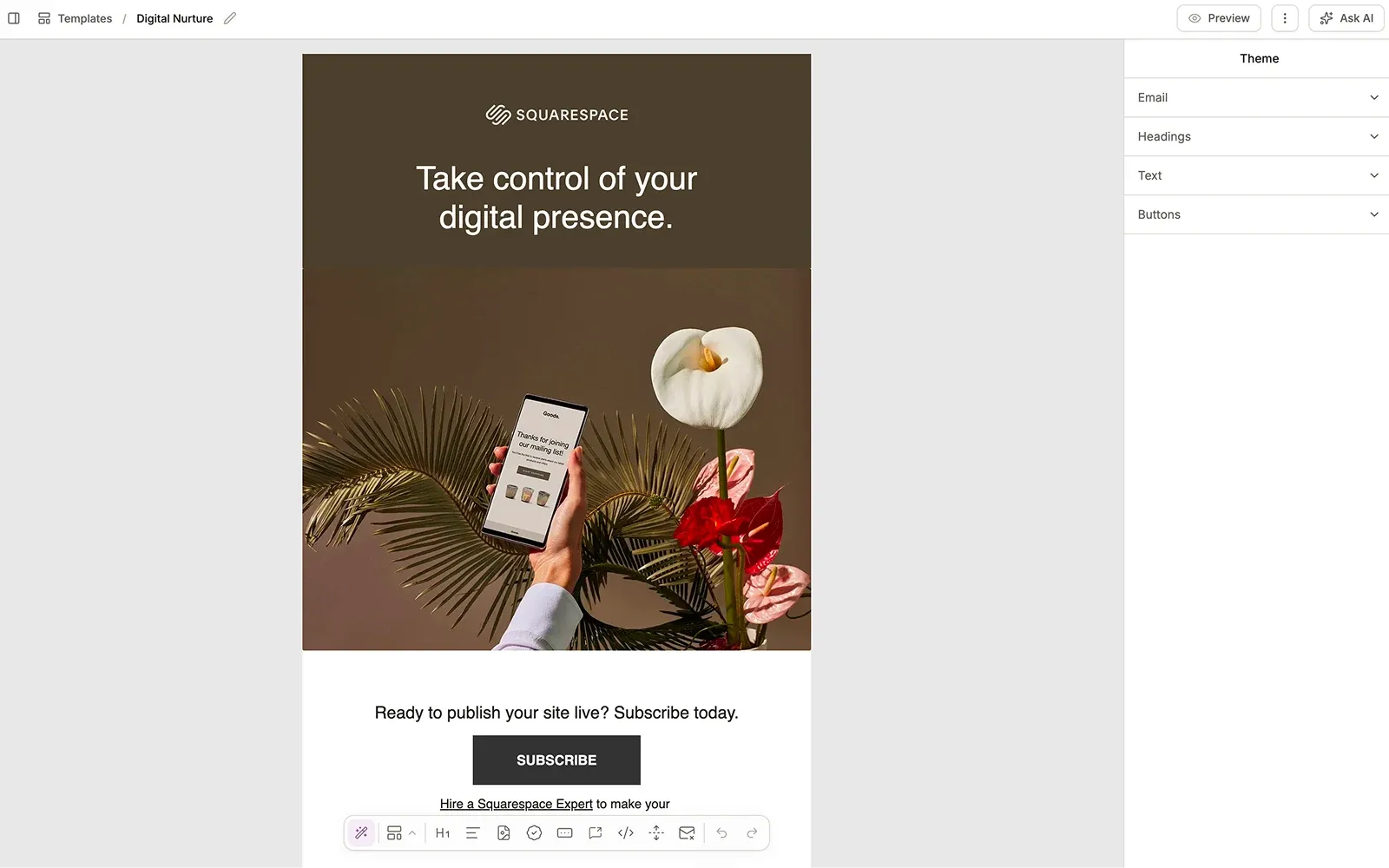
Templates, snippets, and dynamic content rebuilt in a modern editor with live CRM and warehouse fields, and Liquid underneath when your team wants the control.
Describe the campaign in plain English and agents draft the workflow, the emails, the audience, and the forms, then queue every asset for your review. There is no before on this one. Nothing in your current platform does this.
Everything moves over
Your entire marketing operation moves with your data, so your team picks up right where they left off.
Contact Records
Every contact, lead, and account with full field data and list memberships intact.
Email Templates & Assets
HTML templates, images, snippets, and dynamic content blocks rebuilt and tested.
Workflows & Nurture Programs
Automation flows, drip sequences, and trigger logic mapped and rebuilt.
Scoring Models
Lead and account scoring logic translated with behavioral and demographic rules intact.
Salesforce Sync & Integrations
Field mappings, sync rules, and third-party connections configured and validated.
Lists, Segments & Forms
Static lists, dynamic segments, forms, all migrated or rebuilt.
“The Conversion rollout moved in lockstep with the rest of our marketing build-out, which was exactly the right timing. The infrastructure's in place, and now we can start nurturing the leads coming in.”

Jason Ginsberg
Head of Marketing, GovWell
Common questions
Everything you need to know about switching to Conversion.
Most teams are fully migrated and live in 2 to 6 weeks, with the average landing right around four. Simple setups with a few active programs go faster. Enterprise instances with hundreds of programs, complex scoring, and multiple Salesforce integrations take closer to six weeks. Because agents run the audit and rebuild, timeline scales with how much you want to review, and your strategist builds the schedule with you during planning.
Migration is included at no additional cost. Every Conversion contract comes with a dedicated deployment strategist and an agent-run migration as part of onboarding, rather than a separate services engagement you scope and pay for. Your team walks through the specifics of your instance with us before you sign.
Yes. Migrations are phased so your team continues sending from your current platform until each program is rebuilt, tested, and ready in Conversion. There is no gap in campaign execution.
Yes. Conversion syncs to Salesforce alongside your existing platform for the entire parallel run. Field-level sync rules control exactly what Conversion is allowed to write, so the two systems never fight over the same fields, and full audit logs show every change either platform makes.
Your strategist builds a warm-up plan before the first production send. Sending volume ramps gradually on your new infrastructure while your current platform carries the rest, and deliverability is monitored through the switch and the weeks after. Your reputation transfers on your schedule, never in one risky jump.
Contact records, field data, list memberships, and campaign membership all migrate. Historical engagement such as opens, clicks, and program history can be imported during data migration so segmentation and suppression logic that depends on past behavior keeps working from day one.
Unsubscribes, suppression lists, and subscription preferences migrate and are verified before any send goes out. Opt-out parity is a hard gate in the QA phase: no email leaves Conversion until your suppression state matches your current platform exactly.
Nothing breaks when you go live. During discovery, agents inventory every live form, tracking script, and redirect so each one has a plan for the switch. Existing forms keep posting to your current platform until each is replaced, and tracking scripts are swapped as a coordinated step in go-live rather than all at once.
Structured workshops with your strategist in the first weeks, then as many sessions as your team wants. Most teams are comfortable in Conversion before they go live because they have been reviewing and approving work in the platform throughout the rebuild.
Your deployment strategist stays hands-on even after go-live. They monitor deliverability, review campaign performance, troubleshoot any issues, and run optimization sessions with your team. Support does not end once you are live.
Typically very little. Agents and your deployment strategist handle the technical migration, CRM sync configuration, and data validation. If your setup involves custom API integrations or warehouse connections, we may coordinate briefly with your engineering team, but the heavy lifting is on us.
Ready to make the switch?
Talk to our team about an agent-run migration from your current platform. Most teams are fully live in about four weeks.